I want to be direct about something.
In a lot of community-based programs, young people are described as outcomes. They're counted, enrolled, served, completed. Their presence is documented. Their progress is measured. And then the report gets written, and they become a data point that justifies someone else's work.
That is not what we're doing at E4 Youth. And I want to explain why that distinction matters — not as a values statement, but as a practical description of how this work actually operates.
What authorship looks like
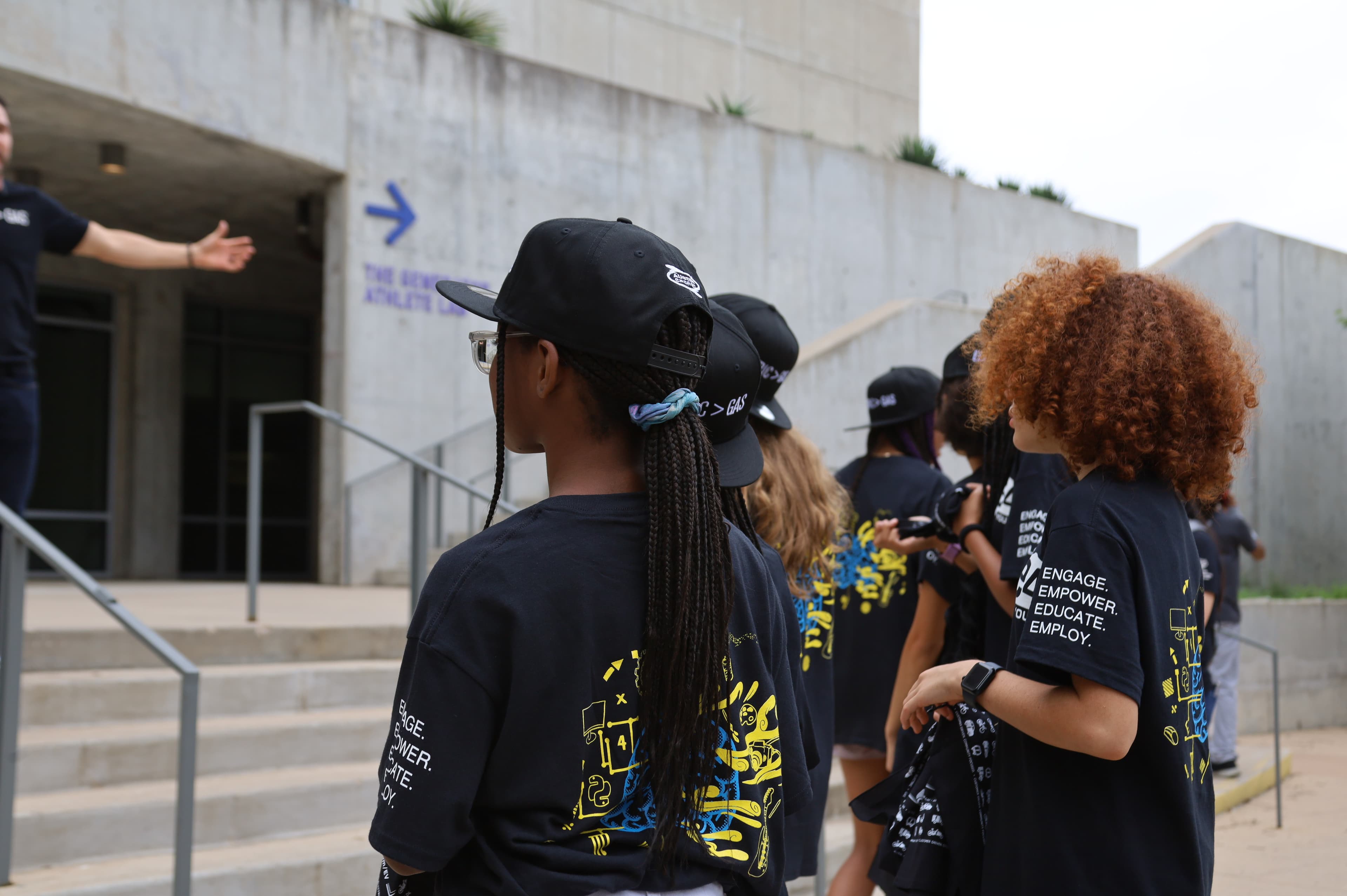
Young people in our programs are working as creators, historians, and interpreters. They're conducting oral history interviews with real skill and real consent practices. They're making editorial decisions about how stories get framed and who they're for. They're navigating genuinely complex questions about public memory and personal privacy — questions that don't have easy answers. They are doing this work, not watching it happen.
That changes everything about what we're responsible for as an organization.
What it asks of us
When youth are authors, we can't just provide access and call it done. We have to provide mentorship, training, and honest feedback. We have to compensate them appropriately for real labor. We have to pace the work so it's rigorous without being extractive. We have to build structures that allow their contributions to live on without depending entirely on their continued unpaid presence. We have to be honest when our systems aren't ready to support the level of authorship we're asking for — and fix them before we ask anyway.
This is some of the most important work we're doing behind the scenes right now, as we prepare to activate the WOW Heritage Center and Emancipation Park. These spaces aren't being designed to display youth work like artifacts behind glass. They're being designed as environments where youth-led creation continues to happen, in public view, supported by the systems that make that sustainable.
HIP, by design
Heritage & Innovation Pathways — HIP — grows directly from this thinking. We're building HIP as a structured, place-based learning pathway that connects cultural preservation, technology, and real future opportunity. It's in development right now, taking shape with partners like Huston-Tillotson University and the Austin History Center. We're targeting a pilot in fall 2026 or early 2027. The goal is a pathway that actually takes young people somewhere — not a program that performs opportunity without delivering it.
I'll be honest: treating youth as authors is harder than treating them as participants. It requires more. It demands more of us as adults and as an institution. But it also produces something fundamentally different. When young people know their work is real — when they feel the weight of authorship and are supported to carry it — something changes in how they show up. The confidence is different. The judgment is different. The sense of ownership over what they're creating is different. And the work they produce reflects that.
That's what we're building toward. Not a showcase. An ecosystem where young people are genuinely the people shaping this story.
If you believe in that kind of work — if you want to mentor, support, partner with, or just witness what's possible when young people are trusted as creators — stay connected. There's a place for you in what we're building.