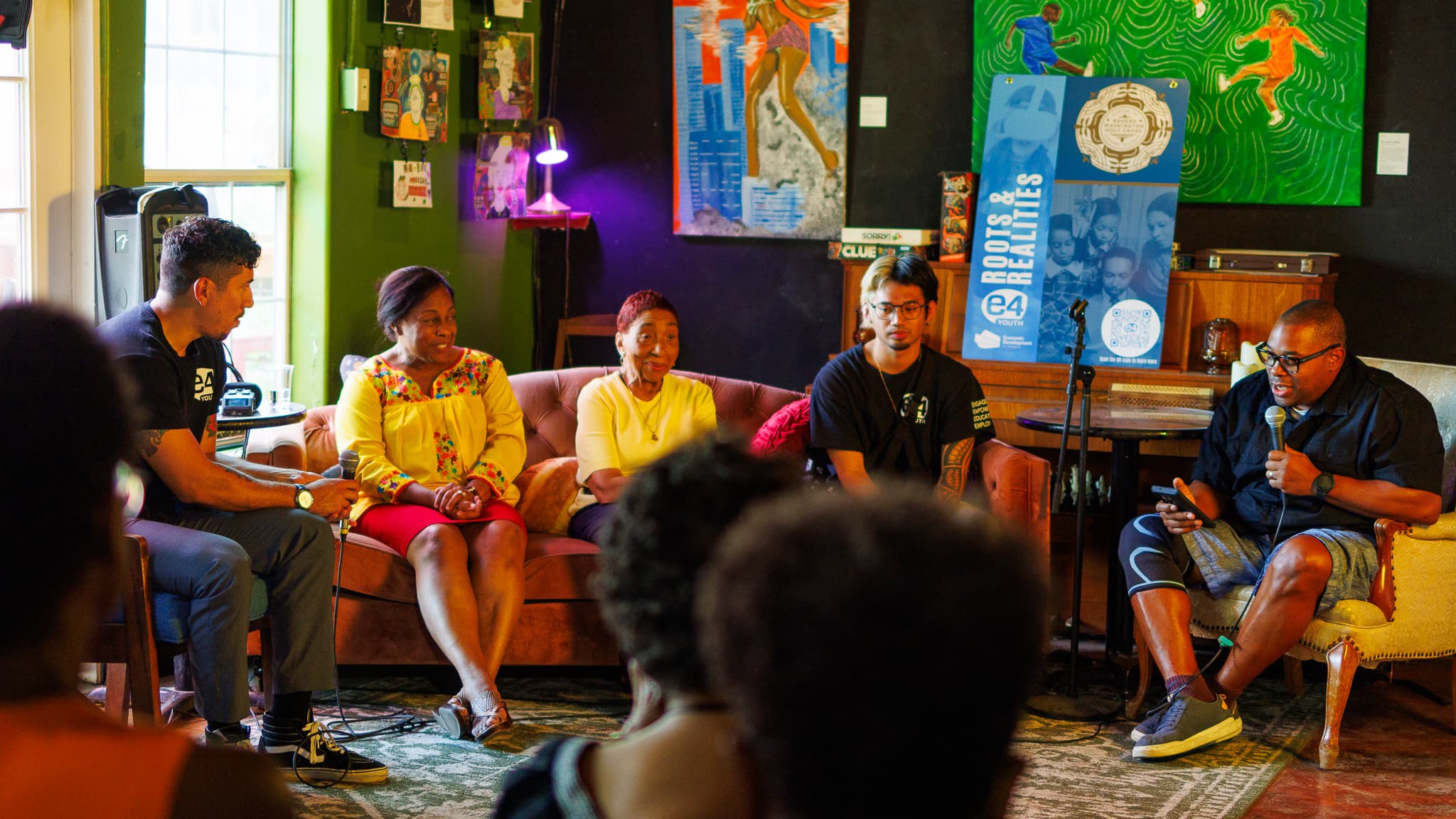
I want to tell you something about how we got here.
Before we move programs into a permanent space — before we decide what goes on the walls or what lives in the archive or what young people present to the public — we made a deliberate choice to slow down and listen. Not because the work isn't ready. But because the responsibility is real.
Across the African American Cultural Heritage District, our programs have been running. Youth are creating. Stories are being recorded. Public experiences are taking shape. And at the same time, we've been paying very close attention to what we're learning — not just about the work itself, but about what it requires to do it well.
What's practical
Some of what we're learning is practical. We're learning how residents want to encounter their own history in shared space. We're learning when a story is ready to be public and when it belongs, for now, to the people who lived it. We're learning how youth experience authorship — the weight of it, the pride of it, the moments when they need more support than we anticipated.
What's harder to name
Some of what we're learning is harder to name. There are ideas that seemed strong on paper that we've paused or reshaped based on what we heard from community. There are moments where enthusiasm outpaced what we could actually support well, and we had to slow down to protect people — not just the ideas, but the actual human beings doing the work.
That's the kind of learning that only happens if you're willing to be uncomfortable with not-knowing for a while.
HIP as proof
Heritage & Innovation Pathways — HIP — is a good example of this. HIP is a program we're building to create real, structured opportunity for young people at the intersection of cultural preservation, technology, and civic learning. The concept is strong. Our partners are committed. But we're not launching it until the curriculum, credentials, and support systems are genuinely ready. We're building it with Huston-Tillotson University, the Austin History Center, and others, taking the time to align roles and expectations together. A fall 2026 or early 2027 pilot is the goal — one built on readiness, not pressure.
Listening before building is not a passive thing. Every insight gathered now shapes what becomes permanent later. Every adjustment we make now protects the integrity of what we're creating. Every voice that gets included now means the WOW Heritage Center and Emancipation Park will reflect something real when they open — not an institution's vision of what the community should want, but something closer to what the community actually needs.
That takes time. It also builds the kind of trust that makes everything else possible.
As we move toward opening this spring, what we've learned in this season will be part of the story we tell publicly. Not as a report. As a reflection on what it means to build with care.
If this approach resonates with you, we'd love to have you following this journey. The learning is ongoing, and there's room for people who want to be part of what's still taking shape.