Let me give you a little context before I get into this one.
In the first post in this series, I mentioned that the WOW Heritage Center will be opening at Pathways at Rosewood Courts, on land that was once Emancipation Park. I said it briefly, and I moved on. But that land deserves more than a passing mention.
1905
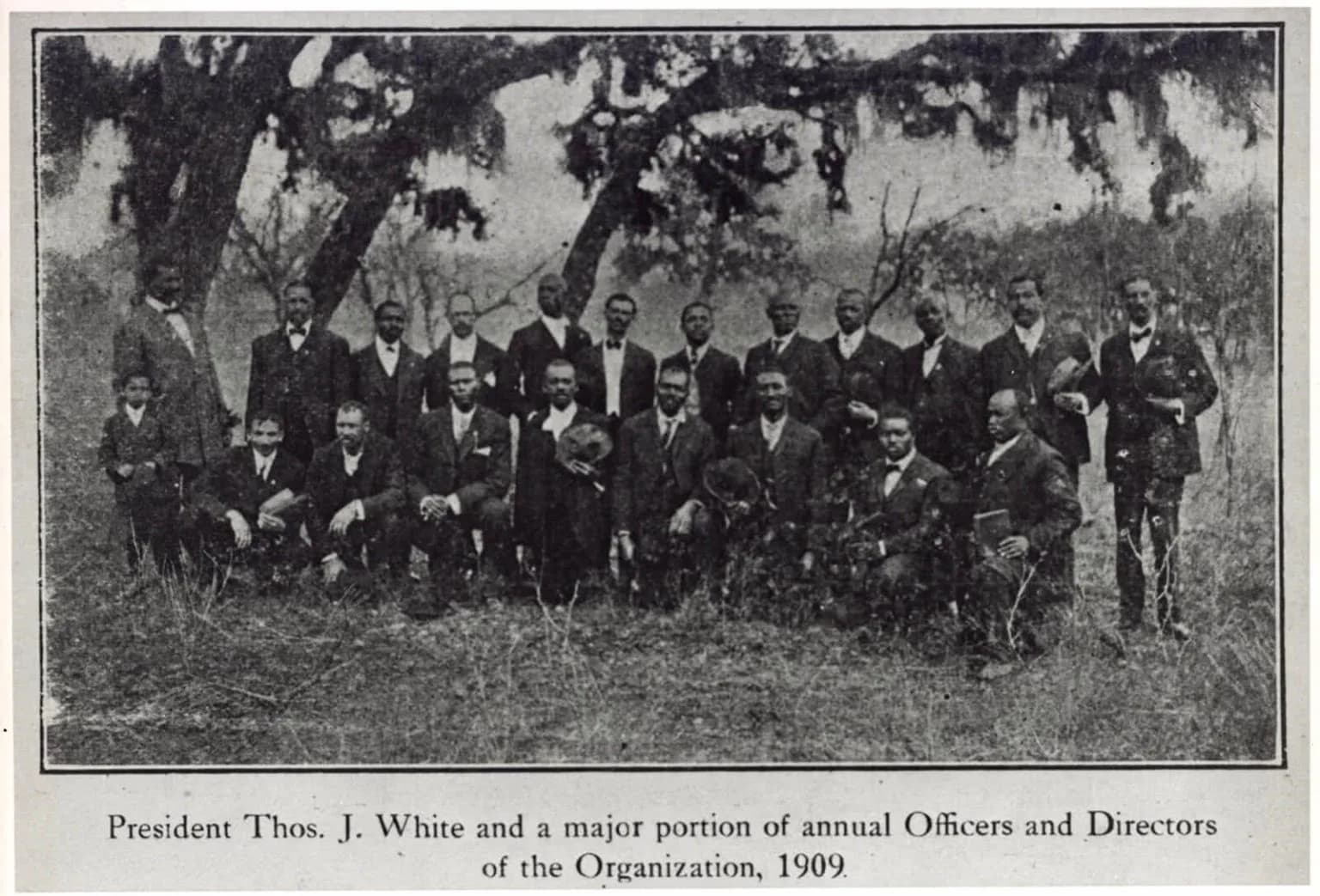
Emancipation Park was established in 1905 — purchased by a group of freed Black Texans as a place to gather and celebrate Juneteenth, because they were excluded from Austin's public parks. Think about that for a moment. This was not a park given to the community. It was a park claimed by the community, at significant cost, because claiming public space for Black life was itself an act of freedom.
The history of what happened to that land over more than a century is complicated — and it's part of what makes the work of re-establishing Emancipation Park meaningful rather than just symbolic.
What public memory requires
Public spaces don't maintain their significance automatically. They require active care, active investment, and active intention about whose presence and whose stories they're designed to hold. That's the work we're stepping into.
Through E4 Youth programs, young people are already engaging with this history — not as observers, but as interpreters. They're learning how public memory is constructed, how space shapes meaning, and what it means to be responsible for something that belongs to a whole community.
Working in and around Emancipation Park offers a different kind of learning than anything that happens indoors. The space itself is part of the curriculum.
And that's what I want people to understand about public memory. It doesn't only live in archives or on plaques or inside buildings with climate control. It lives where people gather, celebrate, debate, and remember together. It lives in the act of showing up in a space and knowing what happened there.
What we're restoring
Re-establishing Emancipation Park is about restoring that — restoring access to a civic commons that was taken, misused, and neglected. It's about creating a space where gathering is itself an act of cultural continuity. Where the Juneteenth celebration, the community conversation, the youth performance, and the quiet moment of reflection are all forms of honoring what this ground has meant.
We're being thoughtful about how Emancipation Park activates alongside the WOW Heritage Center. Not every form of public memory needs a formal program or a scripted interpretation. Some of it happens through presence and use. We're designing for that — for the unstructured moments as much as the programmed ones, for the ways that space can hold multiple audiences and multiple ways of engaging with history.
What we want Emancipation Park to be is simple to say and not easy to build: a place that people return to, because it gives them something real.
We're getting there. And we'd love for you to be part of it.
If the work of public memory and civic space speaks to you — if you're an educator, a historian, a community member, a creative, or just someone who believes this kind of work matters — follow along. There's more to come.